I was reading this piece in the New York Times by Richard Bookstaber — the guy who predicted the 2008 crash — and I had to stop and read it twice.
Not because it was surprising. Because it was confirming what I’ve been feeling in my gut for months.
The next financial crisis won’t start on Wall Street. It’ll start in the physical world — power grids, supply chains, semiconductors — and the financial system has no way to see it coming.
Bookstaber lays out how private credit, AI infrastructure, stock market concentration, Taiwan, Iran — all of it — is wired into the same system. Pull one thread, the whole thing unravels. Not slowly. Fast.
If you’re a contractor, a business owner, a real estate investor, or anyone building something real with your hands and your time — this should have your full attention.
Let me tell you why.
For the Operators and Builders
I’ve been a general contractor for 15 years. I’ve watched lumber prices swing 300% in a year. I’ve seen interest rates go from “free money” to “who can afford to build anything?” overnight.
What Bookstaber is describing isn’t abstract. It’s the world we live in every single day.
When he talks about AI replacing the services that private credit borrowers provide — he’s talking about the software companies, sure. But he’s also talking about the ripple effect. The companies those lenders fund build data centers. They pour concrete. They pull wire. They need HVAC, plumbing, electrical. They need us.
If private credit freezes up — and Bookstaber is saying the early signs are already here — it doesn’t just hit tech. It hits the pipeline of commercial work that feeds contractors nationwide.
Here’s what I tell every operator I work with: You can’t control the macro. But you can control how lean and automated your operation is when it hits.
The guys who survive downturns aren’t the biggest. They’re the ones with the tightest margins, the lowest overhead, and systems that don’t require them to be in the truck at 5am managing every invoice by hand.
That’s not a theory. That’s what I’ve lived through. 2008 nearly wiped me out. I came back because I was small, I was lean, and I could pivot faster than the companies with 50 employees and a bloated back office.
For the Investors
If you’ve built wealth — whether you’re still running your business or you’ve had a liquidity event — this article should make you ask one question:
Where is my money actually sitting?
Bookstaber’s point about stock market concentration is real. Ten stocks make up over a third of the S&P 500. If you’ve got a 401(k), a pension, or an IRA in index funds, you’re not diversified. You’re concentrated in the same handful of tech companies that are leveraged to the same AI infrastructure that’s financed by the same private credit that’s starting to crack.
Read that again.
This is the exact risk that keeps guys like me up at night — not because I’m a doomsayer, but because I’ve been the guy sitting on concentrated risk before. Everything I had was in one basket. My business. If that went sideways, everything went sideways.
The smart move isn’t to panic. It’s to diversify into things you can understand, touch, and verify. Real assets. Cash-flowing real estate. Deals where you know the operator, you know the market, and you know the exit strategy.
That’s not investing advice. That’s common sense from a guy who learned it the hard way.
For the AI Crowd
Here’s where it gets interesting for me personally.
I run an AI automation consulting practice. I help blue-collar business owners — contractors, HVAC companies, plumbers, landscapers — implement practical AI to get their time back.
Bookstaber’s article paints AI as a systemic risk. And he’s right — at the macro level, the infrastructure buildout is creating fragility. The capital flowing into data centers, the energy demands, the semiconductor dependency on Taiwan — all of it is real.
But here’s what the macro view misses:
AI at the operational level isn’t the problem. It’s the solution to surviving the problem.
The contractor who automates his timesheets, his invoicing, his lead follow-up — he’s not adding systemic risk. He’s building resilience. He’s cutting the overhead that kills businesses in downturns. He’s getting 10 hours a week back to actually think strategically instead of drowning in admin.
When the next downturn hits — and if Bookstaber is right, the question is when, not if — the operators with automated systems will be the ones still standing. Not because they avoided the storm, but because they weren’t spending half their energy bailing water out of a leaky boat.
The Takeaway Nobody Wants to Hear
Bookstaber’s closing line hit me hardest. I’m paraphrasing: financial risk moves prices, but physical risk moves the world.
We’ve spent 15 years since 2008 thinking the fix was better financial regulation. And maybe it was — for financial risk. But the risks now are physical. Energy. Semiconductors. Supply chains. Infrastructure.
Those of us who build things for a living? We’ve always known that the physical world is what matters. A house doesn’t care about your hedge fund’s risk model. A power grid doesn’t care about your portfolio theory.
So what do you do with this?
Three Things
If your business can’t survive a 30% revenue drop for six months, you’re not ready. Automate what you can. Cut the overhead that doesn’t directly produce revenue.
If your wealth is concentrated in one business, one asset class, or one index fund full of the same 10 stocks — that’s not a plan. That’s a prayer.
Invest in things you understand. Work with operators you trust. Build assets that produce cash flow regardless of what the market does on any given Tuesday.
The guys I work with — the contractors, the investors, the operators — we’ve always built in the physical world. That’s our advantage. We understand real risk because we live it every day.
The question is whether we’re paying attention.
I am.
Referenced Article
Richard Bookstaber, “I Predicted the 2008 Financial Crisis. What Is Coming May Be Worse.” — The New York Times, March 16, 2026.
Bookstaber is the author of A Demon of Our Own Design, which in 2007 warned of the coming financial crisis. His forthcoming book is A Risk Manifesto: Decisions in the Face of Material Events.
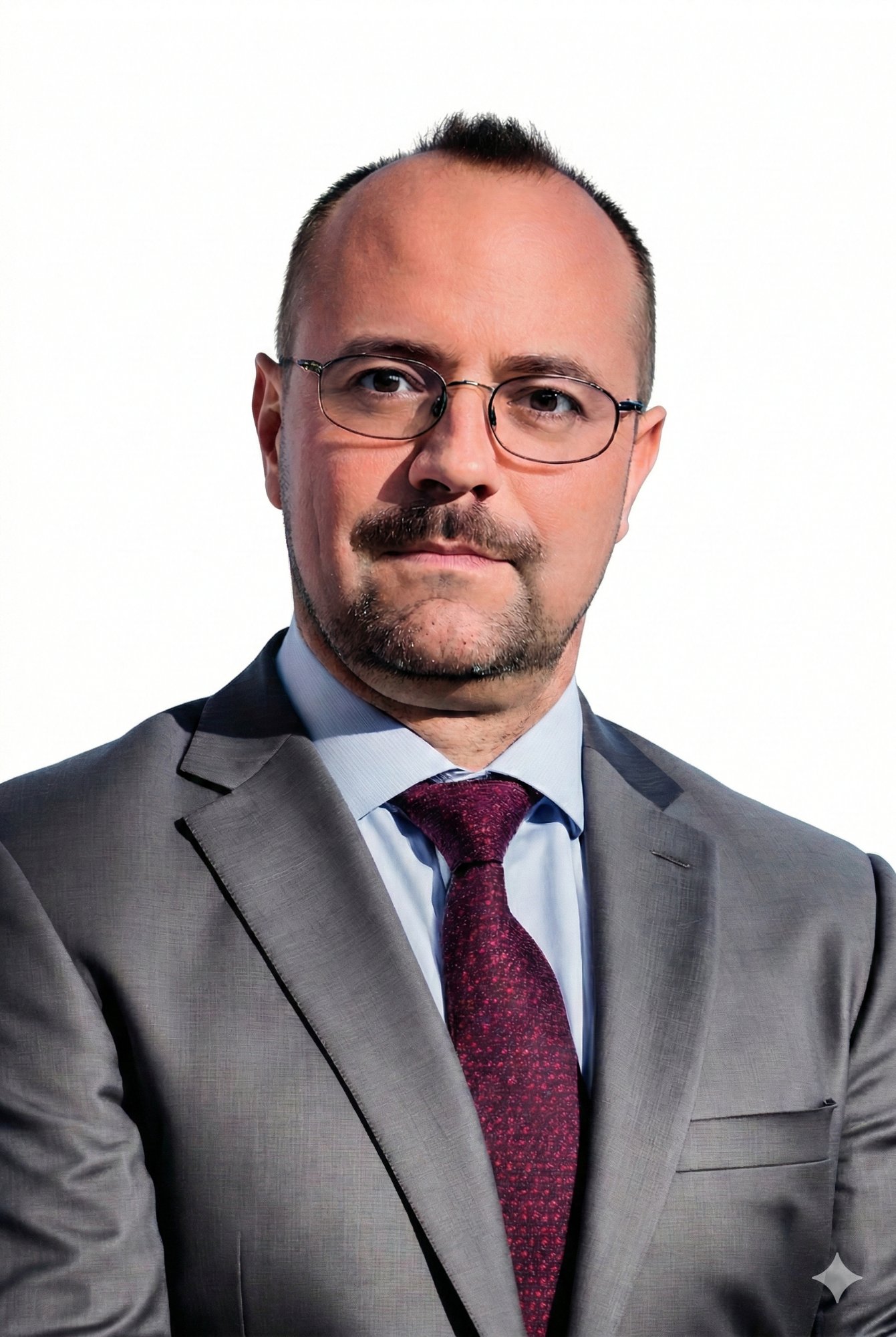
Matt is a licensed general contractor, multi-entity real estate investor, and AI automation consultant based in Broomfield, Colorado. He founded AMS Capital LLC to help hard-working professionals build generational wealth through passive real estate — and Shepard Consulting to help blue-collar business owners reclaim their time through practical AI automation. He started with a $10,000 IRA investment in 2009 and has built a portfolio spanning four states and over 30 doors.
Concerned About Where Your Wealth Is Sitting?
Schedule a free 30-minute call with Matt to talk through your situation — no pitch, just perspective from an operator who’s been through it.